

What is an Integrated Power Center?
Introduction to Integrated Power Centers and Smart Energy Infrastructure
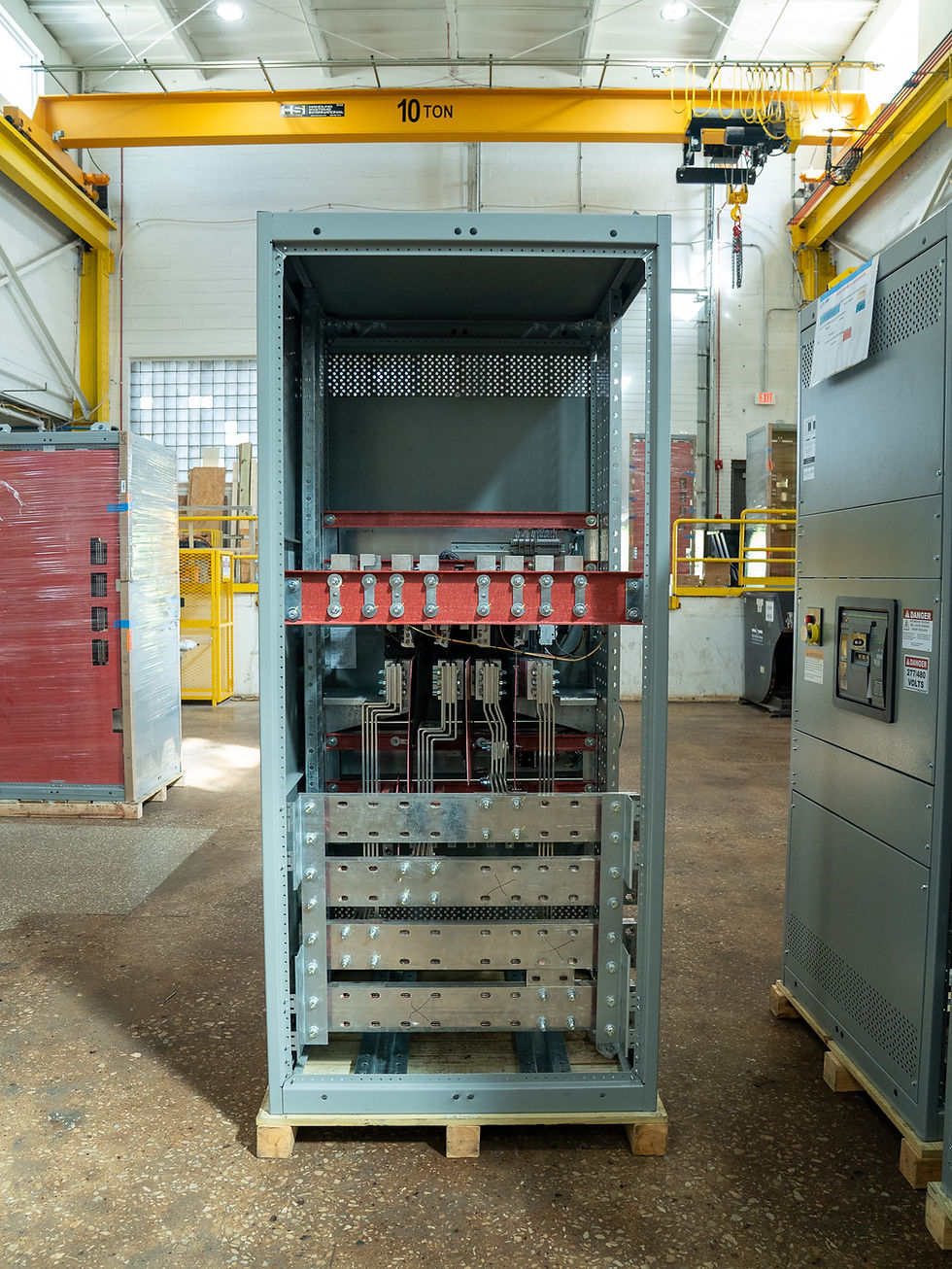
As industrial facilities face increasing pressure to accelerate construction schedules, improve reliability, and maintain strict compliance standards, the demand for prefabricated electrical infrastructure continues to grow. At the center of this shift is the integrated power center, a factory-built solution combining power distribution, circuit protection, transformers, controls, and related equipment into a single, fully assembled unit.
Unlike traditional field-built electrical systems that require extensive on-site labor and coordination, a prefabricated power center is designed, assembled, wired, and tested in a controlled manufacturing environment before arriving at the jobsite. This off-site approach aligns perfectly with modern industrial construction trends, where speed, quality, and safety are critical project drivers. Industries such as data centers, pharmaceutical manufacturing, food and beverage processing, logistics, and chemical production increasingly rely on modular electrical systems to support mission-critical operations. These facilities cannot afford delays, installation errors, or unreliable electrical infrastructure.
As a result, owners and contractors are turning to integrated power distribution systems that arrive pre-engineered, pre-tested, and ready for installation. The combination of prefabrication, National Electrical Code (NEC) compliance, and rapid deployment makes the integrated power center an essential component of modern industrial energy management.
DuFab Manufacturing specializes in this prefabrication model, delivering power solutions and integrated equipment that simplify deployment, while improving consistency and performance. From portable power systems and temporary installations to complete prefabricated e-house solutions and DuMod modular electrical equipment centers, DuFab’s approach reflects the future of industrial power distribution.
Key Components and Architecture of Integrated Power Centers
The effectiveness of an integrated power center begins with its architecture. These systems are engineered to deliver complete electrical functionality within a single factory-assembled package, eliminating much of the complexity associated with traditional field installations.
A typical DuFab prefabricated power center may include transformers ranging from 45kVA–200kVA, medium-voltage and low-voltage switchgear, NEMA 3R panelboards, circuit protection devices, pre-wired control systems, factory-integrated enclosures, and distribution equipment and feeders. Each component plays a critical role in creating a reliable power distribution center capable of serving industrial environments.
Transformers provide voltage conversion, switchgear manages electrical flow, and protective devices isolate faults before they can affect critical operations. Together, these components create a comprehensive modular power distribution platform that can be customized for virtually any industrial application. However, the greatest advantage comes from prefabrication itself.
As DuFab assembles these systems off-site, fabrication occurs under controlled conditions rather than in unpredictable field environments. This controlled process enables consistent workmanship, improved quality assurance, and thorough testing before shipment. Every prefab electrical distribution system undergoes inspection and pre-testing to verify performance before arriving at the project site. This significantly reduces installation risks and helps ensure plug-and-play functionality upon delivery.
Licensed electricians oversee fabrication and integration activities to ensure compliance with NEC standards and client-specific requirements. The result is a highly reliable integrated equipment solution that delivers greater consistency than many field-assembled alternatives.
Integrated Power Centers in Industrial Power Reliability
Reliability is one of the most important factors in industrial electrical infrastructure. A single power interruption can disrupt production schedules, compromise product quality, and create significant financial losses. An integrated power center improves reliability by shifting critical assembly work from the jobsite to a controlled manufacturing facility. Rather than relying on varying field conditions, DuFab’s prefabrication process standardizes assembly procedures and quality controls. This approach reduces variability and creates more dependable electrical systems.
DuFab’s prefab solutions support industries such as data centers, pharmaceutical facilities, chemical processing plants, logistics hubs, and food and beverage operations. These sectors require dependable industrial power distribution infrastructure capable of supporting continuous operations. One of the most significant advantages of a prefabricated power center is rapid commissioning. Traditional electrical installations may require one to two weeks of field assembly, wiring, troubleshooting, and startup activities. In contrast, factory-built integrated systems can often become operational in as little as one day after delivery.
Factory testing further enhances reliability by identifying potential issues before equipment leaves the manufacturing facility. By eliminating many common field-installation variables, prefabrication reduces commissioning risk and improves overall project outcomes.
Energy Efficiency and Project Cost Benefits
Prefabrication offers significant advantages beyond reliability. It also helps industrial organizations reduce project costs, optimize labor resources, and improve schedule performance. Traditional electrical construction often requires extensive field labor for assembly, wiring, and testing. Labor shortages, weather conditions, and site congestion can all impact project timelines and budgets.
A prefabricated power center addresses these challenges by arriving on-site as a complete, ready-to-install solution. Since most assembly occurs in DuFab’s manufacturing facility, contractors spend less time performing electrical work in the field. This reduction in on-site labor translates directly into lower project costs and improved schedule certainty. The ability to eliminate weeks of field assembly represents one of the most compelling benefits of prefab electrical distribution.
Right-sizing equipment also contributes to efficiency. DuFab designs power centers using transformer capacities ranging from 45kVA–200kVA to meet specific project requirements. Proper sizing prevents over-engineering and helps organizations avoid unnecessary capital expenditures.
Temporary vs. Permanent Integrated Power Solutions
Industrial facilities often require both temporary and permanent electrical infrastructure throughout a project’s lifecycle. Prefabrication provides advantages in both scenarios. Temporary integrated power solutions are ideal for construction sites, facility expansions, plant relocations, equipment upgrades, and emergency response projects.
DuFab’s Temporary Power Distribution Equipment provides safe, reusable electrical infrastructure that can be rapidly deployed and relocated as project requirements evolve. These temporary systems function as a portable power distribution center, allowing contractors to maintain operations without the delays associated with field-built alternatives.
Another popular option is DuFab’s Power Skids, which deliver mobile electrical infrastructure in a compact, prefabricated format. Because the equipment is assembled and tested off-site, installation can occur significantly faster than conventional temporary power setups.
Permanent solutions take prefabrication even further. DuFab’s prefabricated e-house systems and DuMod modular electrical buildings provide scalable long-term infrastructure for industrial facilities, utilities, and data centers. These systems often include transformers, switchgear, controls, HVAC equipment, and complete integrated power distribution assemblies housed within a single engineered structure.
Comparing Integrated Power Centers with Traditional Field Installations
The strongest argument for integrated power centers may be their ability to eliminate many of the risks associated with traditional field-built electrical systems. Conventional installations require equipment to be delivered separately, assembled on-site, wired in the field, and tested under often challenging jobsite conditions. Weather delays, labor shortages, site congestion, and inconsistent workmanship can all impact project outcomes.
A prefabricated power center avoids many of these challenges by moving assembly activities into a controlled manufacturing environment. The advantages include improved quality consistency, faster installation schedules, reduced field labor, enhanced worker safety, lower commissioning risk, and greater schedule predictability. For contractors, these benefits create opportunities to complete projects faster while maintaining high quality standards. For facility owners, prefabrication reduces operational risk by delivering tested, validated systems ready for deployment.
DuFab’s solutions are also highly scalable. Organizations can implement anything from a single transformer package to a complete power distribution center housed within a prefabricated e-house. This flexibility makes it easier to transition from legacy field-built systems to modern prefab infrastructure.
Future Trends and Innovations in Integrated Power Centers
The future of industrial electrical infrastructure is closely tied to prefabrication. As modular construction becomes more common, demand for factory-built electrical systems continues to increase. Contractors and owners increasingly recognize that off-site fabrication improves quality, reduces labor requirements, and accelerates project schedules.
Data center construction is a major example. These facilities require rapid deployment of highly reliable industrial power distribution systems. Prefabricated integrated power centers provide a scalable solution that aligns with aggressive construction timelines. Industrial electrification is creating additional opportunities.
The expansion of Electric Vehicle (EV) charging power distribution infrastructure requires flexible electrical systems capable of supporting evolving energy demands. Prefabrication enables organizations to deploy scalable power solutions more quickly while maintaining consistent quality standards.
Another emerging trend involves the Internet of Things (IoT) enabled monitoring technology.
Advanced sensors integrated into modular power distribution systems provide real-time visibility into equipment performance, electrical loads, energy consumption, and safety compliance. These capabilities help facility managers improve efficiency while reducing maintenance costs.
Choosing the Right Integrated Power Center for Your Project
Integrated power centers are reshaping industrial construction by bringing the benefits of manufacturing efficiency to electrical infrastructure. DuFab’s approach centers on prefabrication, allowing organizations to replace labor-intensive field construction with tested, factory-built solutions. Through off-site fabrication, rigorous quality assurance, NEC compliance, and plug-and-play deployment, DuFab helps contractors and facility managers improve project outcomes.
Key differentiators include off-site fabrication expertise, NEC-compliant engineering, factory testing and quality assurance, rapid deployment capabilities, national project support, and single-source design-to-installation services. Compared to traditional field installations, a prefabricated power center offers measurable advantages in speed, quality, safety, and cost efficiency. When evaluating providers, organizations should prioritize customization capabilities, compliance history, prefabrication experience, quality-control processes, and field integration support.
Whether the requirement is a portable power distribution center, a modular panelboard system, a temporary power distribution solution, or a complete integrated power center, the most successful projects are increasingly built around prefabrication. As industrial construction continues to evolve, factory-built electrical infrastructure will play an increasingly important role in delivering reliable, scalable, and cost-effective power systems. For organizations seeking modern power solutions and integrated equipment, prefabrication is no longer simply an option, it is rapidly becoming the industry standard.


Comments