

How Much Does a Modular Data Center Cost?

What Modular Data Centers and Electrical E-Houses Mean for Industrial Facilities
As industrial facilities continue to expand, modernize, and deploy new infrastructure, project teams face increasing pressure to build faster, control costs, and minimize operational disruption. Whether supporting manufacturing operations, logistics networks, pharmaceutical production, or mission-critical power systems, the need for reliable infrastructure has never been greater.
This is where prefab and modular construction strategies are changing the conversation. Instead of building critical infrastructure entirely in the field, organizations are increasingly turning to industrial prefabrication and off-site manufacturing to accelerate schedules and improve project outcomes. Two of the most effective solutions in this space are the modular data center and the electrical house, or E-House. These prefabricated systems provide ready-to-install infrastructure that can significantly reduce construction timelines while improving quality control and predictability.
A modular data center is a pre-engineered, factory-built infrastructure solution that integrates power, cooling, controls, and data capacity into a modular structure that can be transported and installed on-site. Unlike traditional construction, modular systems are assembled and tested in a controlled manufacturing environment before delivery. This approach allows organizations to deploy critical infrastructure faster while maintaining high levels of reliability and performance.
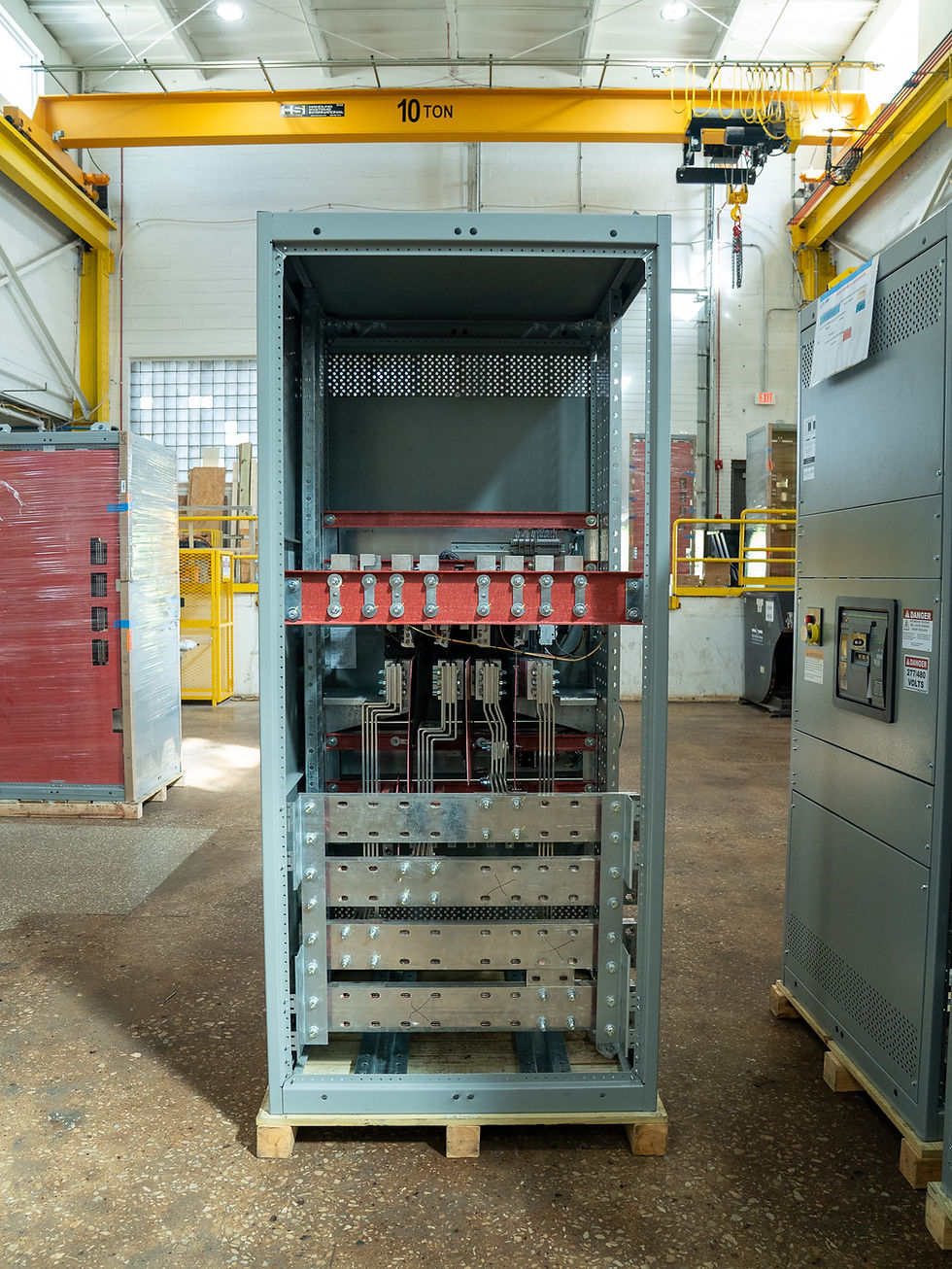
An E-House is a pre-manufactured walk-in structure designed to house electrical distribution equipment, switchgear, transformers, controls, and other critical power components. These facilities serve as centralized electrical hubs for industrial operations and can be customized to support a wide range of power distribution requirements.
For DuFab, these solutions represent far more than standalone buildings. They are examples of how prefab manufacturing can improve the delivery of critical infrastructure. DuFab’s approach centers on designing, fabricating, integrating, and testing key electrical and modular systems off-site before they ever arrive at the project location. This model is especially valuable for large industrial facility construction, plant expansions, facility relocations, power distribution upgrades, mission-critical infrastructure deployment, and data and electrical capacity expansion.
Since the systems arrive substantially complete, installation crews can focus on placement and final connections rather than extensive field assembly. The result is reduced on-site congestion, lower labor demands, improved quality control, and faster project execution.
What Drives the Cost of a Modular Data Center or E-House
When evaluating modular data center cost, modular data center pricing, or the cost of a modular e house, the most significant factor is project scope. The overall footprint and power requirements of the system play a major role in determining cost. Larger facilities require more equipment, more integration, and additional structural support.
Modular electrical and data systems can vary significantly depending on voltage requirements, switchgear configurations, transformer integration, and redundancy needs. A complex electrical distribution center will naturally involve a different investment level than a basic installation. Many industrial clients require custom layouts, specialized equipment integration, environmental controls, or unique structural configurations. Customized systems often require additional engineering and fabrication resources.
Temperature management, HVAC systems, humidity control, filtration, and enclosure requirements all influence project costs. Mission-critical environments often require enhanced protection and monitoring systems. Facilities that demand continuous uptime frequently include redundant power systems, backup generation support, and additional monitoring capabilities. These requirements affect both design complexity and overall project investment.
One of the advantages of working with experienced modular data center suppliers is the ability to perform extensive testing before shipment. While testing adds value, it also becomes part of the project scope and cost structure. As no two industrial projects are identical, modular data center pricing is best evaluated based on performance requirements and site-specific conditions rather than standardized pricing models.
The good news is that prefabrication often improves budget predictability. By shifting more work into a controlled manufacturing environment, project teams gain greater visibility into labor, materials, scheduling, and quality control.
Why Prefabrication Changes the Cost Equation
When evaluating modular data center ROI, it is important to look beyond initial construction costs and consider the total project impact. DuFab’s entire business model is built around the benefits of industrial prefabrication. Rather than performing all assembly on-site, critical components are manufactured, integrated, and tested in a controlled facility before delivery. This approach creates measurable advantages.
Weather delays, labor shortages, site congestion, and coordination challenges can all affect traditional construction schedules. Off-site fabrication minimizes many of these variables by allowing work to continue in a controlled environment. Factory-built assemblies arrive ready for installation, reducing the amount of labor required at the job site. This is especially valuable in regions facing skilled labor shortages.
As systems are engineered and assembled ahead of time, teams can identify conflicts and resolve issues before delivery. This often leads to smoother installations and fewer field modifications. Prefabricated systems are built using standardized manufacturing processes and quality assurance procedures. This reduces errors and minimizes costly rework during installation. For industrial owners, speed often translates directly into financial value. Faster deployment can help facilities begin production sooner, support phased expansion strategies, and reduce disruption to ongoing operations.
These advantages are a major reason organizations choose to buy modular data center solutions rather than relying entirely on traditional field-built infrastructure. The value extends well beyond construction costs and contributes directly to improved project outcomes.
Modular Data Centers vs. Traditional Site-Built Infrastructure
Traditional construction methods require project teams to coordinate numerous trades, material deliveries, and installation activities at the job site. While this approach remains common, it can introduce schedule uncertainty and quality variability. A modular data center or electrical E-House offers a different model.
Factory-built systems can be manufactured while site preparation activities occur simultaneously. This overlap shortens overall project timelines and accelerates deployment. Controlled manufacturing environments support repeatable processes, standardized quality checks, and comprehensive testing. This creates a level of consistency that is difficult to achieve in variable field conditions.
Reducing field labor and minimizing overhead work improves overall job-site safety. Prefabrication also reduces congestion and material handling challenges. Modular systems can be expanded as operational needs evolve. Additional modules can often be integrated more efficiently than constructing entirely new infrastructure from scratch. For active facilities, minimizing disruption is often a top priority. Modular solutions allow much of the work to occur off-site, limiting interference with ongoing operations.
These advantages are particularly attractive in industries such as pharmaceutical manufacturing, food and beverage processing, chemical production, logistics, warehousing, and large-scale manufacturing where uptime, speed, and reliability are essential.
Best-Fit Applications for DuFab’s Modular Solutions
Not every project requires a modular solution, but many industrial projects can benefit significantly from DuFab’s capabilities. Organizations building new industrial facilities often use modular infrastructure to accelerate schedules and reduce construction risk. When existing facilities require additional power capacity or data infrastructure, modular systems can provide rapid deployment with minimal operational disruption.
Modular electrical E-Houses and infrastructure systems can support relocation projects where speed and flexibility are critical. Prefabricated E-Houses can serve as a centralized power distribution hub, while minimizing field installation complexity. Facilities that require resilient power and data capabilities often benefit from factory-built systems designed for reliability and performance. Organizations requiring additional computing capacity may choose a modular data center to achieve faster deployment timelines and more predictable project execution.
Industries that commonly benefit from these solutions include food and beverage, pharmaceutical manufacturing, chemical processing, logistics and distribution, warehousing, heavy manufacturing, and industrial infrastructure projects. In these environments, the ability to deploy integrated systems quickly and reliably often creates substantial operational advantages.
Why DuFab Is Different
DuFab’s value extends beyond fabrication alone. We combine extensive experience in electrical construction, industrial systems integration, and prefab manufacturing to support complex industrial projects. As part of the Dubak Electrical Group ecosystem, DuFab brings real-world field experience into every prefabrication project.
Many of the prefabrication methods and modular solutions utilized by DuFab have already supported a significant portion of Dubak Electrical projects in the field, providing practical insight into what works best under real-world construction conditions.
Reasons To Select DuFab
Controlled manufacturing environments.
Quality-focused execution.
Deep understanding of critical-path infrastructure.
Electrical integration expertise.
Schedule-driven project delivery strategies.
Ready-to-install modular systems.
DuFab’s focus on schedule reduction, risk mitigation, and quality control helps owners and contractors achieve better project outcomes while reducing many of the uncertainties associated with traditional construction methods.
When evaluating how much does a modular data center cost, it is important to look beyond upfront construction expenses and consider total project value. Factors such as deployment speed, quality control, labor availability, schedule certainty, and operational disruption can significantly affect overall project outcomes. In many cases, the true value of a modular data center, modular E-House, or other prefabricated infrastructure solution comes from improved execution rather than simply lower initial costs. Through industrial prefabrication, organizations can reduce field risk, improve installation efficiency, and accelerate schedules while maintaining high standards of quality and reliability.
For industrial owners, contractors, and facility teams seeking scalable infrastructure solutions, DuFab’s expertise in prefab manufacturing, modular systems, and ready-to-install electrical solutions provides a practical path toward faster, safer, and more predictable project delivery. Whether supporting a new facility build, plant expansion, power distribution upgrade, or mission-critical deployment, DuFab’s prefabrication approach is designed to help complex projects succeed.


Comments