

How to Prevent Capacitor Failure: Maintenance and Reliability Guide

In industrial electrical systems, capacitors are among the most critical components for stability and efficiency. They reduce reactive load, filter harmonics, smooth voltage transitions and absorb changes when heavy machinery or motors cycle on and off. Because these environments impose significant electrical and thermal stress, understanding how to prevent capacitor failure is essential for product developers, procurement specialists, quality professionals and maintenance teams responsible for ensuring long-term system reliability.
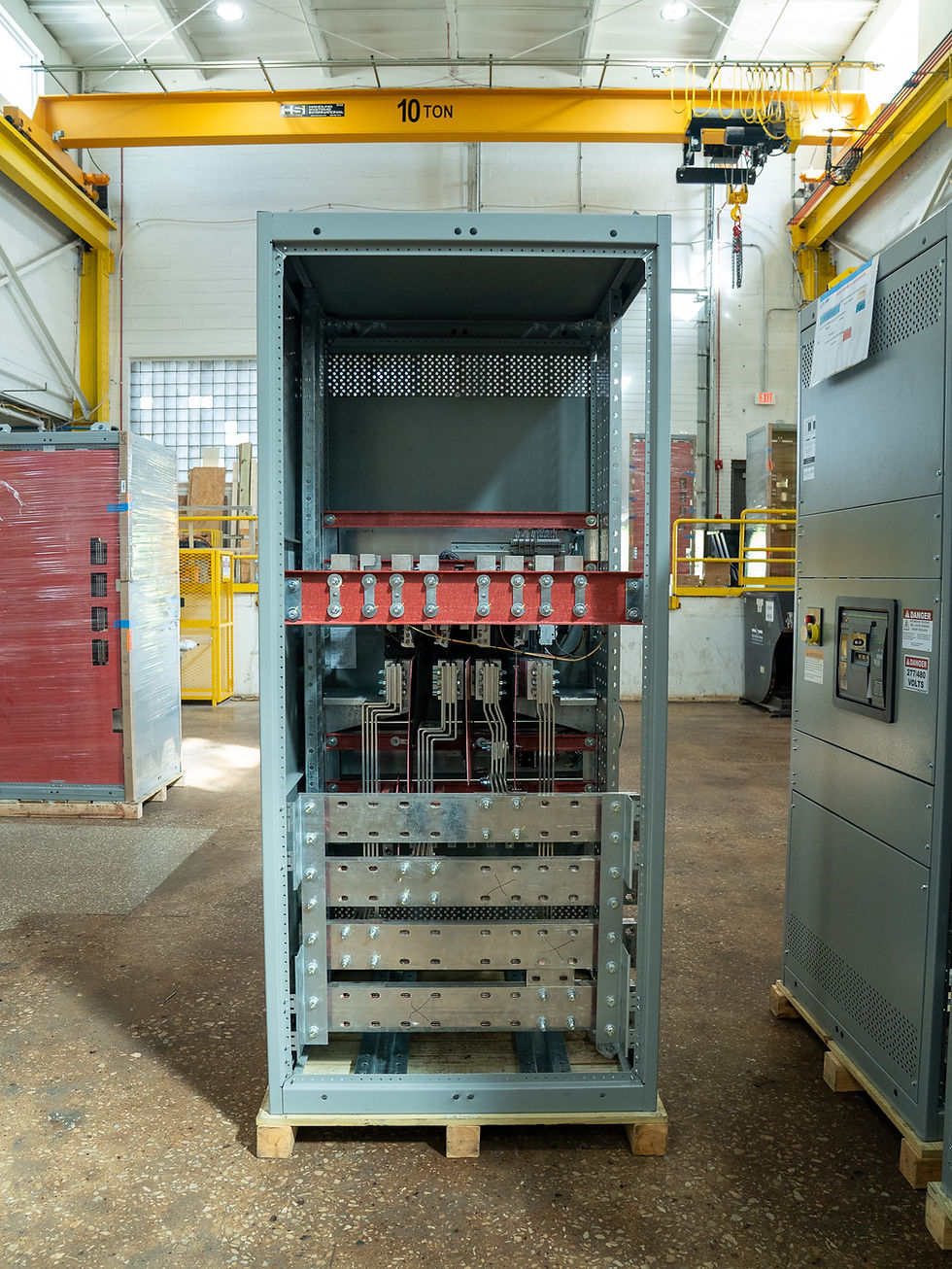
At DuFab Manufacturing, capacitors are among the components housed inside the prefabricated electrical rooms and E-houses we build for industrial facilities. Building in a controlled shop environment means proper ventilation, mounting and spacing are addressed before assemblies ever reach the jobsite, reducing the installation-related stress that leads to premature capacitor failure.
Capacitors fail for a variety of reasons, including electrical overstress, thermal cycling, poor installation, contamination or degradation of internal materials. These issues often compound over time, meaning a structured and preventive approach is essential. Here's what to know about applying consistent capacitor maintenance, understanding capacitor failure modes and using rigorous capacitor reliability testing to extend operating life and avoid unplanned downtime.
Introduction to Capacitor Failure Prevention
Capacitor failure typically results from three primary stress categories, which are electrical, thermal and mechanical. Electrical stress includes issues such as overvoltage, ripple current or transients that exceed design specifications, while thermal stress stems from high ambient temperatures or heat generated inside an enclosure. Additionally, mechanical stress can happen from vibration, mounting strain or repeated expansion and contraction.
The first step in knowing how to prevent capacitor failure is recognizing that these stresses almost always build gradually. A capacitor rarely fails suddenly unless it's subjected to catastrophic overstress, and most will show signs of deterioration long before they fail. That’s why routine capacitor maintenance is so crucial. It can help detect issues like leakage, swelling, discoloration or an abnormal rise in temperature.
Understanding Common Capacitor Failure Modes
Capacitors used in heavy industrial systems face some of the harshest conditions of any electronic component. The most common capacitor failure modes include:
Dielectric Breakdown
When voltage exceeds the capacitor’s dielectric strength, an insulation failure can occur. This could lead to short circuits, overheating or explosive venting. Electrolytic capacitor designs are particularly susceptible because their dielectric oxide layers can degrade over time.
Corrosion and Electrolyte Dry-Out
This is especially relevant for an electrolytic capacitor, as corrosion of its internal plates or evaporation of its electrolyte can steadily reduce its capacity. Not only that, but this failure mode accelerates with higher temperatures, humidity or poor sealing.
Thermal Runaway
Heat increases ESR, which produces more heat and can create a destructive feedback loop. Capacitors adjacent to heat-generating components or enclosed within unventilated prefabricated assemblies are at higher risk.
This is one of the reasons DuFab Manufacturing prioritizes controlled build environments. Prefabricated electrical rooms are designed with proper ventilation and component spacing from the start, reducing the thermal risk that unventilated or poorly assembled enclosures create.
Mechanical Stress and Vibration
Loose mounting, improper clamping or continuous vibration from nearby motors can lead to internal fractures or terminal detachment. Additionally, environmental factors play a significant role. High humidity promotes corrosion, rapid temperature swings cause expansion and contraction that weaken internal structures, and dust and contaminants can penetrate poorly sealed units.
Implementing a Capacitor Maintenance Schedule
A consistent maintenance schedule is one of the most effective strategies for capacitor lifespan extension. Capacitors can operate for years without trouble, but all of them eventually degrade. A structured schedule allows early detection of warning signs, so components can be replaced before failure impacts operations.
Key tasks in a comprehensive capacitor maintenance program include:
Visual Inspections: Look for bulging, leaking electrolyte, discoloration, cracked insulation or loose terminals.
Electrical Measurements: Perform capacity checks, ESR testing, leakage current measurement and insulation resistance testing.
Environmental Monitoring: Record enclosure temperature, airflow, humidity and dust levels, as environmental drift is a significant contributor to degradation.
Scheduled Replacement: Some capacitors have known wear-out characteristics. Proactively replacing them at 70-80% of rated life is a best practice.
Documentation is essential, and maintenance records help predict failure trends, track component quality and standardize replacement intervals across multiple installations.
Capacitor Reliability Testing and Troubleshooting
Before integrating capacitors into large-scale distribution equipment or temporary power systems, rigorous capacitor reliability testing provides assurance that the components will perform under expected conditions. There are several essential testing methods that can detect problems early.
Electrical Parameter Testing
This includes capacity verification, ESR measurement and breakdown voltage testing, as these measurements can help show manufacturing defects, dielectric weakness or early degradation.
Thermal Shock Testing
Rapid heating and cooling cycles test the capacitor’s ability to withstand industrial temperature swings, which are common in outdoor power systems and transformer enclosures.
Life Testing (Endurance Testing)
Capacitors are subjected to rated voltage and elevated temperature for long durations, and this test simulates years of field operation to reveal long-term weaknesses.
Troubleshooting is also critical, as common capacitor issues include abnormal heating, reduced capacity, intermittent short circuits and leakage. A well-documented troubleshooting guide helps technicians quickly isolate causes such as circuit overstress, harmonic distortion or improper installation.
Conducting a detailed failure analysis ensures that corrective actions are based on evidence, and this process typically involves visual and microscopic inspection, ESR trend review, dielectric analysis and comparison against historical performance records.
Extending Capacitor Lifespan Through Preventive Maintenance
Preventive maintenance is central to how to prevent capacitor failure, and a proactive approach typically doubles or even triples capacitor service life. There are several core preventive measures techs can take.
Proper Selection and Sizing
It's crucial to choose capacitors with voltage ratings at least 20-30% above their expected operating levels to accommodate transients. Capacitors used in distribution centers or power-factor correction banks must also be rated for harmonics and ripple current.
Correct Installation
Ensure solid mounting, adequate ventilation and correct polarity (for electrolytic units), as improper torque on terminals is a common cause of early failure.
Environmental Control
Keep capacitors away from heat sources, maintain airflow, control humidity and avoid direct exposure to vibration to keep the environment stable and encourage capacitor lifespan extension.
Early detection tools such as thermal imaging, impedance monitoring and ESR trend analysis also allow technicians to identify developing issues long before failure occurs, greatly reducing downtime and supporting the overall system.
Capacitor Selection Guide: Ensuring Reliability From the Start
A large percentage of capacitor failures stem not from usage but from incorrect selection during design or procurement, so choosing the right device can dramatically improve the system's reliability. Key factors in a capacitor selection guide include the following.
Capacitance Value and Tolerance: Match the capacitance to application requirements, including filtering, smoothing, power-factor correction and transient absorption.
Voltage Rating: Voltage rating is one of the most critical factors, and underrated capacitors will fail quickly under transients or sustained overvoltage conditions.
Temperature Rating: Because capacitor core temperatures and hot spots may approach 85-105 degrees Celsius under load, it’s important to select capacitors designed for high-temperature operation.
Ripple Current and ESR: High ripple environments demand low-ESR capacitors capable of handling continuous current flow.
Environmental and Mechanical Requirements: Applications exposed to vibration, shock or fluctuating humidity need strong mechanical construction and superior sealing.
By focusing on these considerations, it's far easier to ensure reliability from the earliest design stages.
Safety Tips for Capacitor Discharge and Handling
Before performing capacitor maintenance, it's essential to safely discharge stored energy, as improper discharge can cause shocks, burns or equipment damage. Key safety guidelines include understanding the risks, as even small capacitors can retain dangerous charge and larger units used in industrial electrical systems can deliver lethal energy.
Additionally, technicians should always use proper discharge tools, and discharge capacitors using a resistor or purpose-built discharge device. Never short terminals directly, as doing so may cause arcing, internal damage or explosion.
Wearing PPE also matters, and safety glasses, insulated gloves and appropriate clothing are necessary when handling capacitors. Before handling capacitors, verify zero voltage. Techs should always use a multimeter to confirm that the capacitor is fully discharged before handling.
Key Takeaways on Capacitor Care
Preventing capacitor failure requires a comprehensive approach spanning proper selection, preventive maintenance, testing and safety practices. As a facility manager or project lead, you can integrate these practices into your build process by:
Understanding capacitor failure modes to diagnose causes accurately
Implementing a structured capacitor maintenance schedule
Conducting regular capacitor reliability testing
Choosing capacitors engineered for real-world industrial conditions
Applying preventive maintenance and early detection techniques
Following strict safety protocols for discharge and handling
For industrial facilities and contractors, preventing capacitor failure starts before the jobsite. DuFab Manufacturing builds prefabricated electrical rooms and E-houses to exact specifications, ensuring critical components are properly mounted, ventilated and protected from day one.
Want to reduce risk on your next industrial build? Contact DuFab Manufacturing to learn how our prefabricated electrical rooms and E-houses are built to support long-term system reliability.


Comments