

What Is the Purpose of a Transformer in Electrical Systems?

Transformers play a powerful part in modern electrical systems, adjusting voltage levels so that equipment can operate safely and efficiently. Understanding the purpose of a transformer starts with recognizing that an electrical grid depends on stable voltage; a transformer is designed to shift that voltage to the level needed for a device, a building or an entire community, directly supporting electrical energy transmission across long distances and making power practical for daily use in both residential and commercial settings.
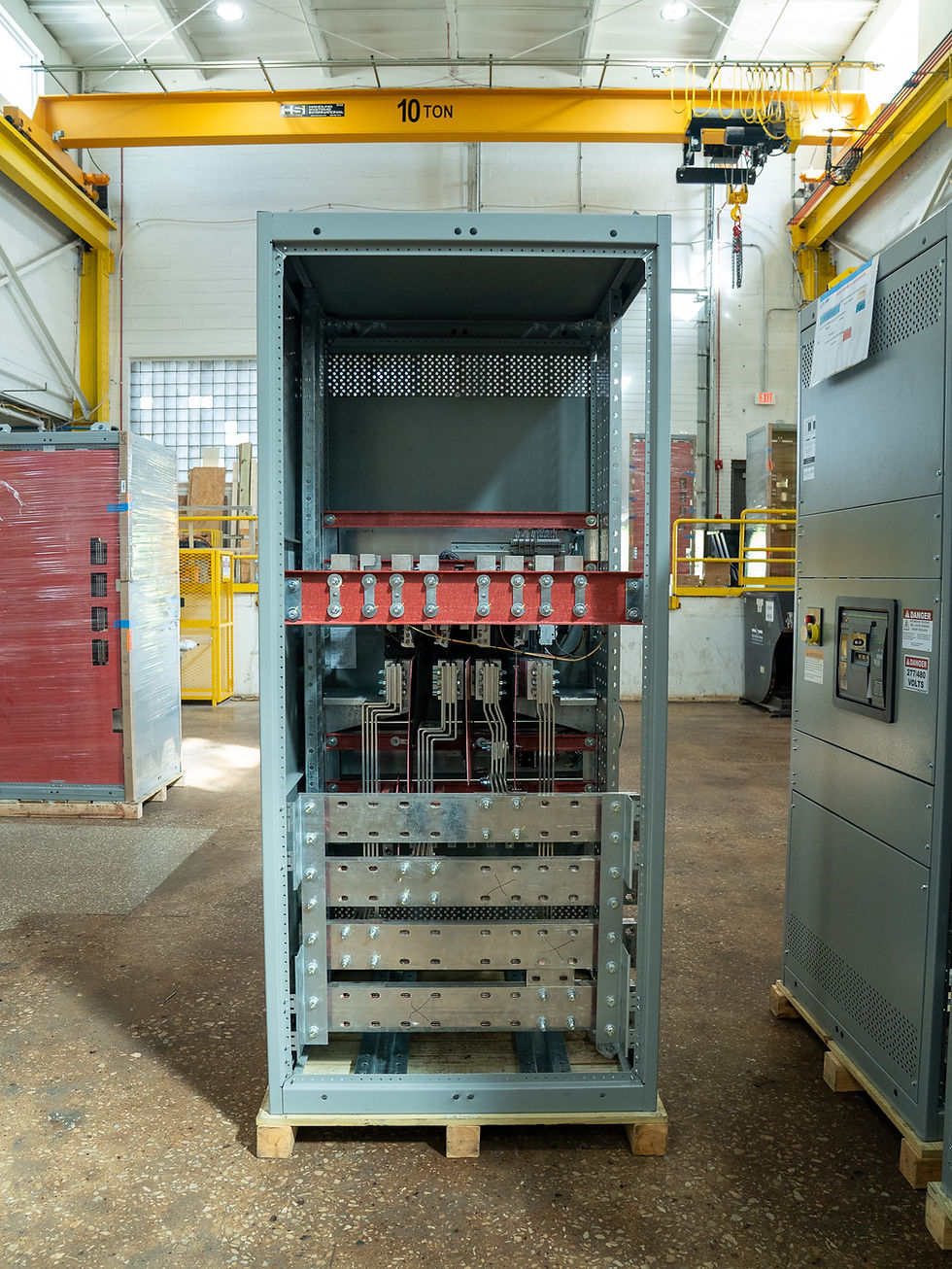
At DuFab Manufacturing, the electrical rooms and E-houses we build for industrial and commercial facilities are designed to house critical components like transformers. Understanding how they work is foundational to understanding why quality prefabrication matters.By reducing the amount of energy lost as electricity travels through lines, transformers support electrical energy transmission. Energy loss is minimized when voltage is sent at a high level, then reduced near the point of use. This makes transformers vital in homes, schools, hospitals, factories and infrastructure systems for maintaining consistent power quality, preventing equipment failures and reducing safety risks.
Across industries, workers rely on transformers without always seeing what takes place inside. Their function is simple but powerful: convert voltage, regulate power and support safer, more efficient electrical distribution. These benefits are built on the transformer working principle, transformer efficiency, transformer design, electrical energy transmission, transformer safety and transformer components.
Transformer Design and Components
A transformer is assembled from several key components that work together to adjust voltage for different applications. Knowing these parts helps professionals troubleshoot faults, complete maintenance tasks and select the right equipment for a project. The main elements include:
Primary coil, which receives incoming electrical power
Secondary coil, where the transformed voltage is delivered
Magnetic core, which strengthens the electromagnetic induction process
Insulation materials, which keep internal parts protected
A tank or enclosure, shielding the equipment from the environment
These all work as a system built on electromagnetic induction. The transformer working principle is based on this idea: when alternating voltage enters the primary coil, it creates a magnetic field. This field transfers energy to the secondary coil and produces a new voltage level. Professionals apply this principle whether the transformer increases or decreases voltage.
Transformer design calculations help engineers tune this process for specific uses; for example, a power transformer may require thicker windings or different insulation materials than a smaller distribution transformer used in neighborhoods. Design choices often depend on whether the transformer needs to support high-load industrial equipment or lighter commercial loads. Engineers also consider magnetic core materials, such as silicon steel or amorphous metal, which reduce heat and lower energy loss. Better materials can support higher transformer efficiency, reduce transformer losses and lead to longer service life.
Because different industries call for different equipment, the types of transformers are made for matching needs. Each design supports specific voltage levels, operational demands and environmental conditions. Careful transformer design makes it possible to meet safety standards, performance goals and long-term reliability.
Types of Transformers and Their Applications
Several types of transformers are seen across electrical systems, each one created for a particular function. The most typical types include power transformers, distribution transformer units, instrument transformer devices and specialty units used in industrial settings.
Step-up transformers boost voltage for long-distance transmission, as sending electricity at a high voltage reduces losses and makes the system more efficient. On the other hand, step-down transformers lower voltage for safer use in homes and businesses. When both functions are analyzed, step-up and step-down transformers help exemplify how electrical systems meet different power requirements.
Power transformers are common in substations, helping regulate power flow between transmission lines. In homes and commercial buildings, a distribution transformer delivers the proper voltage for outlets, machinery or lighting systems. Instrument transformer units, meanwhile, support monitoring and measuring functions by lowering high levels of power to safe values for testing devices.
Transformer applications vary widely. Hospitals depend on stable voltage to keep imaging systems safe. Factories use transformers to power heavy machinery that runs at different levels. Schools and office buildings count on consistent voltage for lighting and HVAC systems. Across these environments, choosing the correct transformer design improves transformer efficiency and supports steady operation.
Transformer Safety and Maintenance
Maintenance technicians often face pressure to diagnose problems quickly and prevent downtime. To lower the risk of failures, a transformer maintenance checklist helps guide routine inspections. A typical rundown looks like:
Checking insulation for wear
Inspecting the tank for leaks
Monitoring oil levels and quality when oil-filled transformers are used
Recording temperature levels under load
Tightening external connections
Examining protective relays and fuses
Transformer safety protocols are put in place to protect workers and equipment. As technicians handle high voltage, lockout procedures, grounding checks and personal protective equipment are non-negotiable. Transformer safety spans preventing contact with energized parts, watching for overheating and using safe lifting practices to avoid mechanical injuries.
Testing transformers confirms functionality and helps catch problems proactively. Transformer testing procedures often include insulation resistance testing, turns-ratio testing and voltage regulation checks. Some sectors also complete thermal imaging to look for hot spots or signs of internal wear. Ultimately, testing applies to all transformer types, from electrical transformers in small facilities to large power transformers in utility yards.
Improving Transformer Efficiency
Transformer efficiency impacts energy costs, equipment lifespan and overall system reliability. Boosting efficiency often begins with reducing heat and energy loss; many losses result from resistance in windings or poor core materials. High-grade magnetic core materials, tightening connections and following transformer design standards all contribute to better energy performance.
Improving transformer efficiency also involves voltage regulation. Good regulation keeps voltage stable under changing loads, while poor regulation leads to overheating, low performance in connected equipment and greater maintenance needs. With this in mind, many facilities adopt automatic tap changers and monitoring tools that adjust voltage in real time.
Transformer losses are reduced when equipment is correctly sized. Oversized units waste energy, and undersized ones overheat and wear down early. Engineering teams carefully follow transformer design standards during planning to strike a safe balance between performance and cost.
Some examples show how efficiency improvements work in real settings: utility companies replace aging transformers with low-loss models to cut energy waste, while factories adopt monitoring sensors to track power demands and adjust loads.
Transformer Installation and Guidelines
Correct transformer installation supports safe operation and long-term performance. Most installation steps follow a standard process:
Evaluating the site for stability, clearance and ventilation
Inspecting the transformer for shipment damage
Positioning the transformer with proper lifting equipment
Grounding the unit
Connecting primary and secondary cables
Testing insulation and verifying voltage values
Completing safety checks before energizing
Following a transformer installation guide protects technicians from hazards and prevents early equipment failure. Other best practices include monitoring environmental conditions, avoiding moisture buildup and maintaining enough space for inspections and repairs.
Businesses also use installation guidelines to stay compliant with safety codes. Contractors working in commercial buildings must follow local electrical regulations, fire codes and load requirements. For industrial and commercial facilities, having transformers housed within a prefabricated electrical room built in a controlled environment and delivered ready to install significantly reduces the risk of installation errors and site delays. That's the approach DuFab Manufacturing takes on every project.
Transformer Testing and Certification
Standard testing gives engineers and technicians confidence that a transformer will operate safely under load. Common transformer testing procedures include dielectric tests, ratio tests, load tests and polarity checks. Tests verify that the windings deliver the correct voltage, that insulation works properly and that the transformer meets design expectations.
Certification is also crucial: many transformers follow IEEE, ANSI or NEMA standards that define safe operation. Certification helps facility managers confirm that equipment is built to accepted transformer design standards, supporting reliability, efficiency and compliance for inspections.
Regular testing helps prevent unexpected failures. Businesses that complete yearly inspections and testing catch heat buildup, internal wear or early corrosion before major damage occurs, simplifying maintenance and saving costs.
Transformers and the Case for Prefabrication
Put simply, transformers support the electrical systems that power homes, businesses and industrial sites. They adjust voltage, reduce losses, regulate power and allow safe electrical energy transmission. However, a transformer’s reliability depends on regular maintenance, safety practices and well-designed components that follow proven standards.
For facilities teams and contractors working on large-scale industrial builds, the quality of the electrical room housing a transformer is just as important as the transformer itself. DuFab Manufacturing specializes in prefabricated electrical rooms and E-houses built to exact specifications, ensuring that critical components like transformers are housed in a controlled, code-compliant environment and ready to perform from the moment they reach the jobsite.
As industries expand, transformer technology trends continue to evolve. New materials, digital monitoring tools and smarter designs will improve performance and lower energy costs. By understanding their function, following the best practices and planning for future changes, businesses can keep electrical systems safe and efficient for years to come.
Ready to streamline your next industrial build? Contact DuFab Manufacturing to learn how our prefabricated electrical rooms and E-houses are built to house critical systems with precision, reliability and jobsite-ready quality.


Comments